See how each buyer pays, month by month
Every buyer now has its own analytics page: what you invoiced and what they paid, how their balance and overdue amount moved, whether they pay on time, and where their credit stands. It covers the last six months and the current month to date.
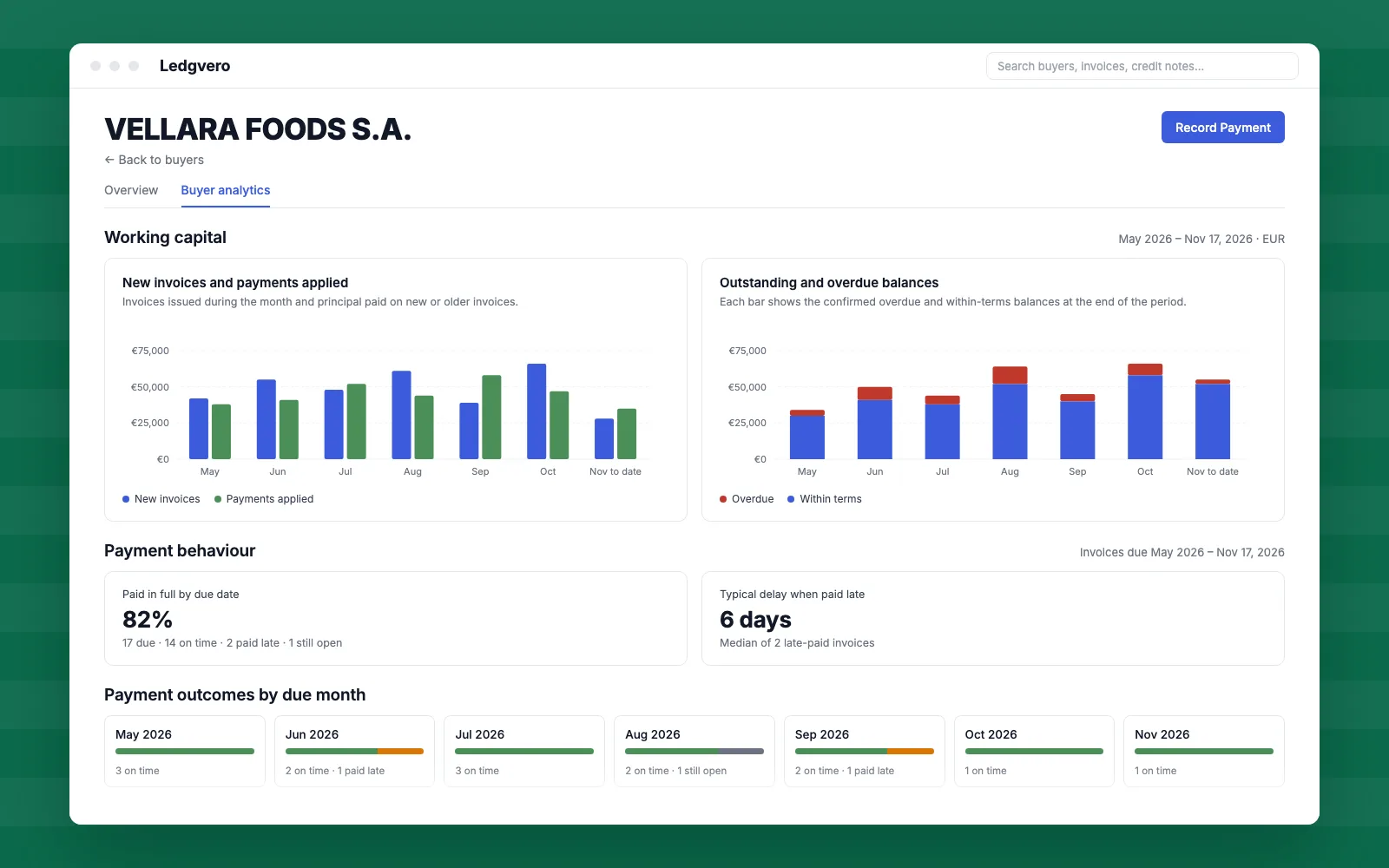
Before you chase a buyer, raise a limit or ship the next order on credit, you want to know how that buyer really pays. Now one page tells you.
Invoices and payments, side by side
Each month shows what you invoiced the buyer next to what they paid. Payments include factoring collections and settlements. A second chart shows the balance at the end of each month, split into what was within terms and what was overdue, so you can see a buyer slipping before it becomes a problem.
Does this buyer pay on time?
Payment behaviour shows the share of invoices paid in full by their due date and, for the ones paid late, how late they typically were. Below it, each due month gets a bar of paid on time, paid late and still open. Open a month to see its invoices and how many days early or late each one was paid.
Every change explained
Monthly reconciliation walks each month from opening balance to closing balance: new invoices, payments applied, credit notes, write-offs and other changes, each linked to the invoice behind it. When something is missing, such as an invoice without a void date, Ledgvero says so instead of guessing.
Where the buyer stands today
Open balance by age splits what is owed into not yet overdue, 1–30, 31–60 and 61+ days late. Credit position shows the credit limit, outstanding invoices, unapplied credit and the headroom that is left, and warns you when a buyer is over their limit.
Where to find it
Buyers › open a buyer › Buyer analytics. The figures cover the last six completed months and the current month to date, in your reporting currency. How these figures are calculated, at the bottom of the page, explains every rule.